
How Rekeying Works
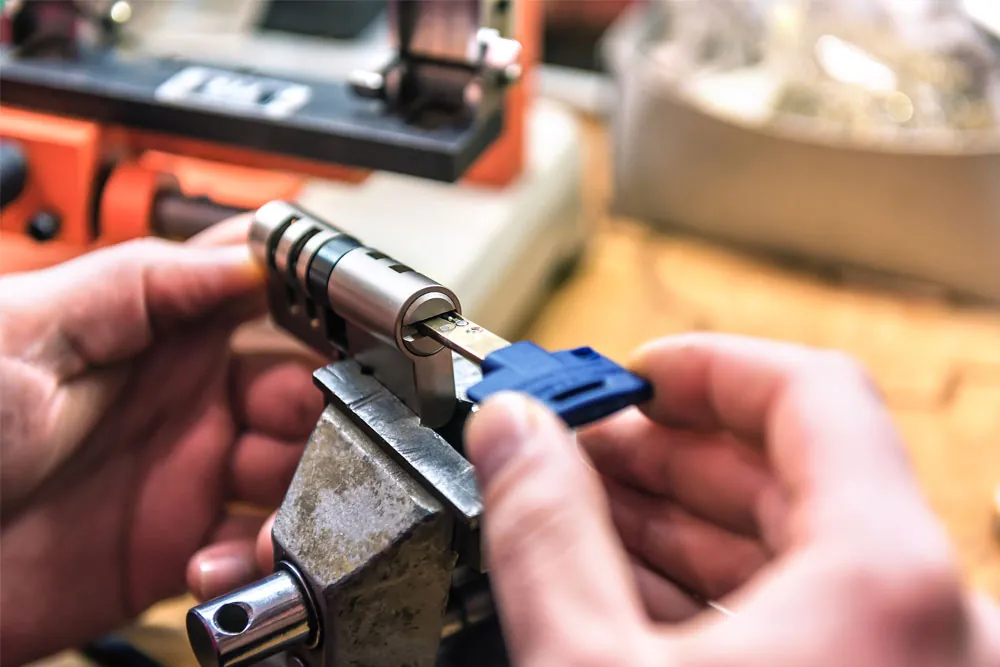
Inside every pin-tumbler lock is a set of small key pins that line up with the cuts on your key. When we rekey, we replace or rearrange those pins to match a brand-new key. Your existing hardware stays on the door; only the key changes. Though it sounds complicated, a trusted Master Locksmith makes it simple and hassle-free.
Rekey vs. Replace: Which Do You Need?
Rekey when…
- A copy of your key is lost or stolen
- You move into a new home or apartment
- A tenant, employee or ex should no longer have access
- You want one key for several locks of the same brand
Replace when…
- You want a new look, finish or style
- Locks are old, worn, rusty or not working properly
- You want to upgrade to electronic or high-security hardware
- You want one key for locks of different brands
Rekeying is usually cheaper because we only change the pins, not the whole lock. Not sure which is right? Call us — we'll give you an honest recommendation. If replacement makes more sense, see lock installation & repair.
Rekeying for Landlords and Businesses
Tenant turnover and employee departures are the most common reasons businesses call us. For properties with many doors, consider a master key system or card access control so future changes are even easier.
Frequently Asked Questions
Do I need my current key to rekey?
Having the working key makes rekeying quicker, but it is not required. If you don’t have it, we can pick or decode the lock first.
How long does rekeying take?
Most residential locks take just minutes each. A typical home can often be done in a single visit.
Is rekeying as secure as new locks?
Rekeying makes old keys useless, which solves most security concerns. For added protection against picking or bumping, ask about high-security cylinders.